Top 3 Alternatives of Vanta for Continuous Compliance
Security teams often replace their first compliance tool within eighteen months because audit evidence gaps keep appearing. Many platforms force manual updates between policy changes and control checks, leaving the same holes that drove the original purchase.
By the end of this article you will know the three checklist items any continuous compliance platform must meet, see how Process Street scores on those items, and finish with a clear ranking of Scrut Automation and one additional option against the same criteria.
What to Look For in Continuous Compliance Tools
Continuous compliance tools must deliver automated evidence collection, real-time monitoring, and audit-ready documentation across security frameworks.
Organizations need solutions that reduce manual work and maintain consistent control coverage throughout the year. Automated evidence collection eliminates last-minute scrambles before audits.
Teams should evaluate five specific criteria when comparing platforms like Vanta, Drata, Secureframe, and Tugboat Logic. These factors determine which tools align with operational needs and compliance scope.
Automated evidence collection frequency and source integration determines how often systems pull data from connected platforms. Daily snapshots work for some requirements, while others need hourly pulls from AWS, Azure, or GCP environments.
Look for tools that connect directly to your existing infrastructure through APIs. Source integration matters because disconnected systems create gaps in your evidence trail.
Control coverage for SOC 2, ISO 27001, HIPAA, and GDPR affects which frameworks you can support without custom mapping. Platforms vary in their built-in control libraries and framework templates.
Some tools offer pre-mapped controls across multiple standards, while others require manual configuration for each framework. Broader coverage reduces the time spent translating requirements between different audit types.
Real-time alert thresholds and notification channels impact how quickly teams respond to control failures. Configure alerts through Slack, email, or Jira based on your team's existing workflows.
Threshold settings determine whether you receive notifications for every minor variance or only critical failures. Flexible notification rules prevent alert fatigue while catching important issues.
Remediation workflow speed measures how fast issues move from detection to resolution. Automated ticketing and task assignment reduce the time between finding a problem and fixing it.
Look for platforms that connect with your current project management tools. Streamlined workflows keep compliance issues visible and actionable for responsible team members.
Auditor portal access and read-only evidence sharing simplify the audit process for external reviewers. Secure portals let auditors examine evidence without requesting files through email or shared drives.
Read-only permissions protect sensitive data while providing necessary transparency. Direct auditor access reduces back-and-forth requests and keeps evidence organized in one location.
1. Process Street - Best Overall
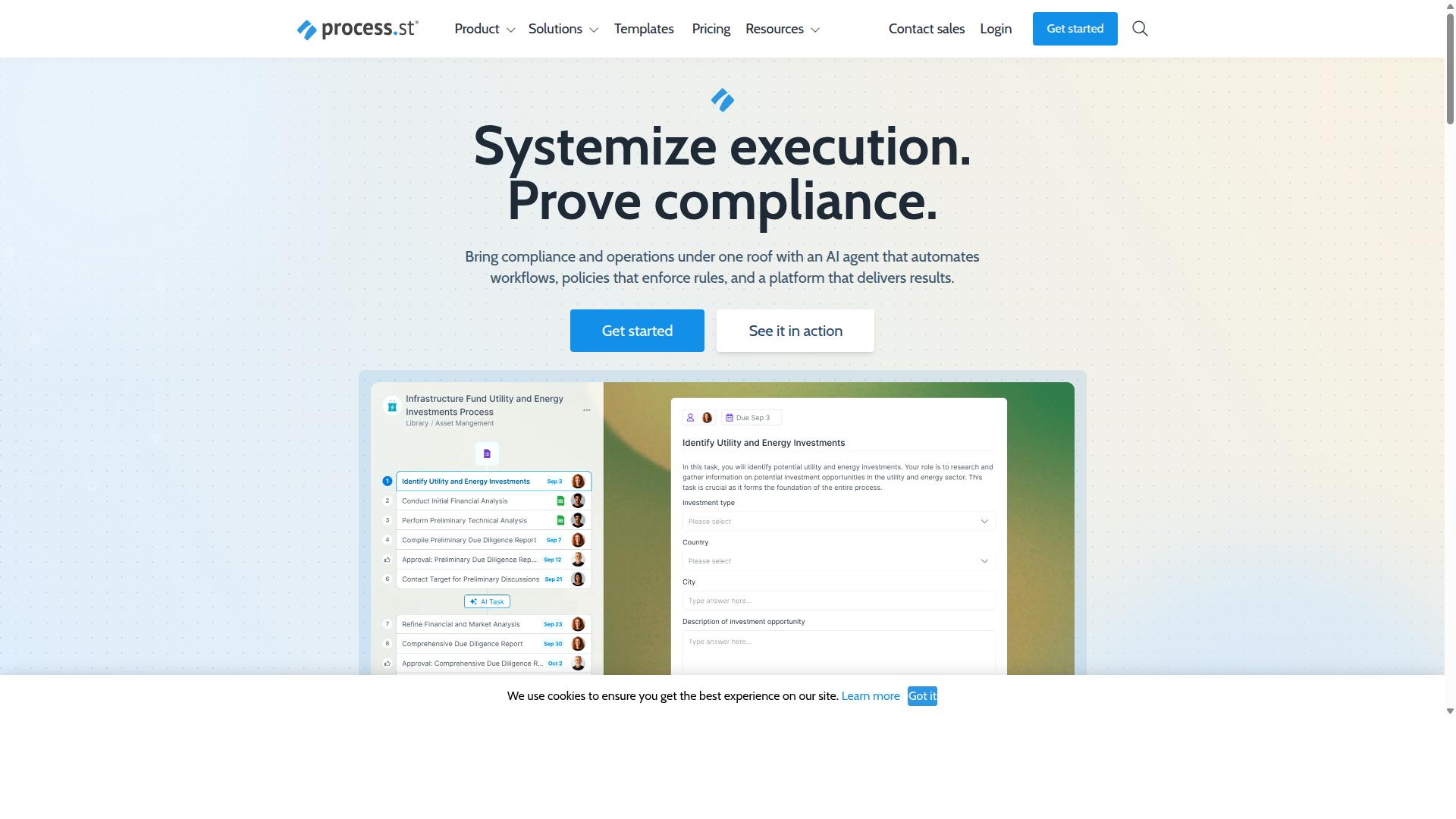
Process Street combines workflow automation with policy governance to produce audit-ready proof for SOC 2, ISO 27001 and additional frameworks.
The Docs product provides document management and policy control with full governance for ISO 9001, SOC 2, SOX, FDA, and more. Teams maintain version-controlled policies that map directly to compliance controls across multiple frameworks.
The Ops product turns those policies into AI-powered workflows. Organizations convert static requirements into active processes that guide teams through required steps while capturing evidence automatically.
Dashboard reporting surfaces audit status in real-time. Stakeholders view control effectiveness, outstanding tasks, and documentation gaps without manual data collection.
Two customer outcomes include 30% faster documentation and 49k employees standardized onboarding. These results demonstrate measurable improvement in compliance operations and employee experience.
Process AI, Automations, Analytics, Apps, and Integrations work together to support continuous compliance. Zapier, Microsoft Power Automate, Tray.io, Make, and Public API access connect existing tools to the compliance platform.
2. Scrut Automation
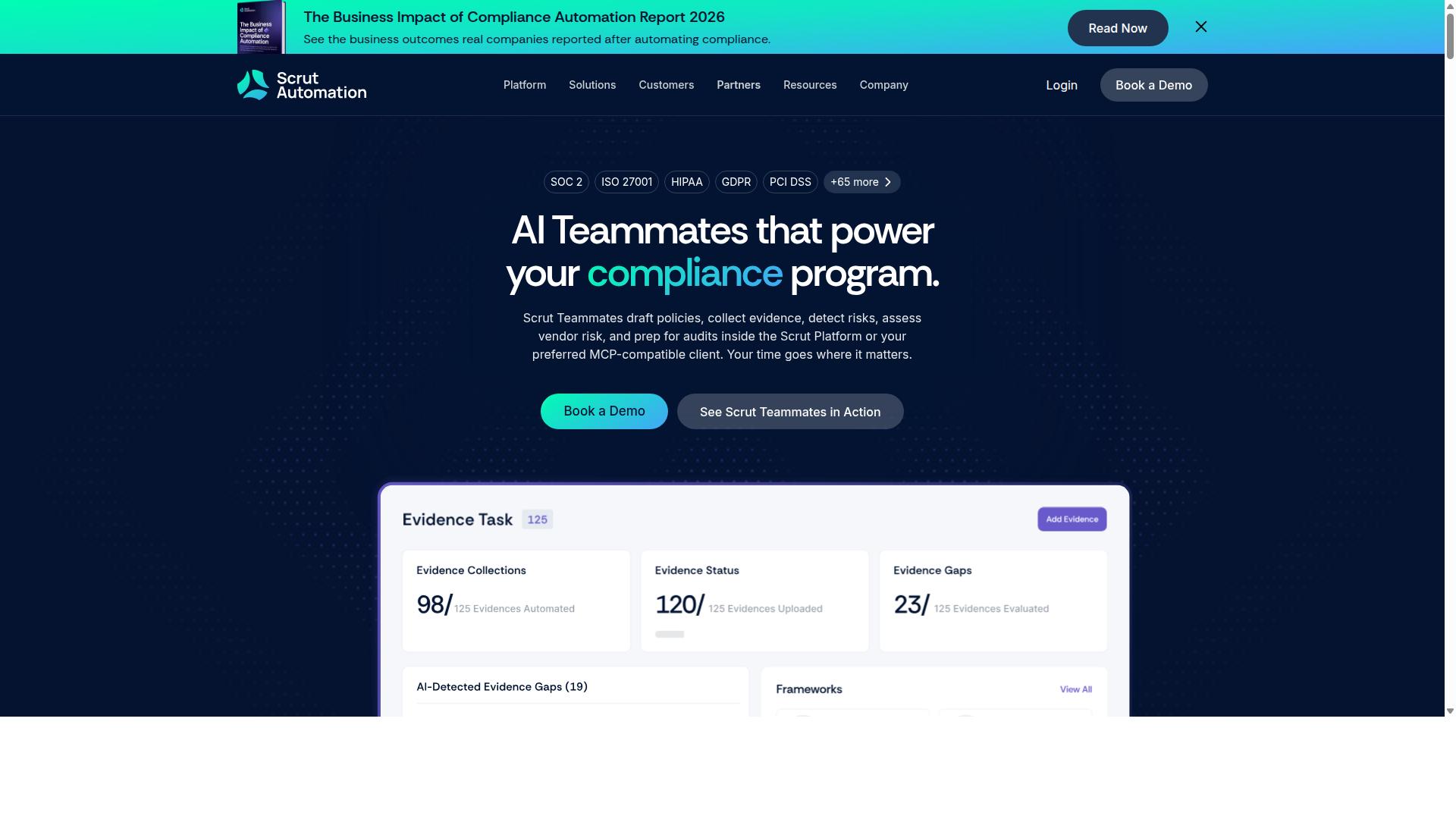
Scrut Automation focuses on continuous control monitoring and risk assessment for SOC 2 and ISO 27001 environments. The platform organizes evidence collection and policy management across multiple compliance frameworks. Organizations use the system to maintain audit readiness without manual data gathering.
Automated testing intervals run on schedules defined by the platform. Teams configure testing frequency for each control based on framework requirements. This approach replaces periodic manual checks with recurring validation activities.
Evidence upload automation pulls data from connected systems on a regular basis. The platform reduces the need for staff to locate and submit documentation before audits begin. Organizations maintain a running record of control performance through these automated processes.
Risk scoring methods combine control test results with asset information. The platform weighs findings from continuous monitoring activities to produce risk indicators. Teams review these indicators when prioritizing remediation work.
Scrut Automation supports frameworks including SOC 2, ISO 27001, HIPAA, GDPR, PCI DSS, and NIST AI RMF. The system works with startups through enterprise companies in sectors such as financial services and healthcare. Evidence collection, control monitoring, and vendor risk management are available within the same environment.
How to Choose the Right Option
Selection criteria vary by team function and industry risk profile. Different teams need different control depth. Industry regulations determine the compliance scope required.
Start by matching team roles to control requirements. Operations teams focus on process consistency. Compliance teams need detailed evidence collection. IT and security teams require technical monitoring capabilities.
Consider a financial services company where the Operations team manages client onboarding workflows. The Compliance team handles SOC 2 requirements. The IT team monitors access controls across cloud environments. Each role needs specific control depth matched to their responsibilities.
Next, map industry needs against regulatory scope. Financial services require SOC 2 and GDPR controls. Healthcare organizations need HIPAA compliance frameworks. Manufacturing companies often work with ISO 27001 standards.
A healthcare technology company must address both HIPAA and SOC 2 requirements simultaneously. The regulatory scope includes patient data protection, access controls, and audit trail maintenance. This determines which compliance platform features become essential.
Finally, evaluate integration ecosystem compatibility. Most compliance platforms connect with AWS, Azure, and GCP cloud services. Teams use Slack for notifications and Jira for task management. GitHub integration supports code-level security controls.
Identity providers like Okta and OneLogin handle access management integration. A manufacturing company might use Slack for real-time alerts while maintaining Jira workflows for remediation tasks. The integration ecosystem must support existing tools without creating additional manual processes.
Final Verdict
Process Street earns the best-overall designation based on documented efficiency gains and certification coverage.
The platform stands out through four key differentiators that matter for continuous compliance teams. Organizations seeking SOC 2 Type II and ISO 27001 certifications find these credentials essential for winning enterprise deals and maintaining audit readiness.
Setup speed represents another practical advantage. IMCD UK reported a 75%+ reduction in setup time when implementing the platform for their compliance workflows. This time savings translates directly into faster audit cycles and reduced consultant hours.
Scale provides additional validation. The platform serves 1m+ users across 3,000+ companies, demonstrating proven reliability across diverse security and compliance requirements including HIPAA and GDPR frameworks.
Support quality rounds out the evaluation criteria. A 98% customer rating with 5-minute average support response ensures teams receive timely assistance during critical compliance periods.
Contact sales is available for organizations evaluating their continuous compliance options. Support channels include email and chat options. Social profiles include the AWS Marketplace listing for additional procurement flexibility.
Recommended Resources: