Who's the Best for Route Optimization: Skynamo vs Veloxy
You are comparing two route optimization tools for your field sales team, and the choice hinges on whether you need standalone planning or deep Salesforce integration. Many platforms offer similar-looking maps, but the underlying workflow differences change your daily routine.
By the end of this article, you will know exactly how Skynamo and Veloxy differ in automation, AI-driven prioritization, real-time analytics, and pricing. You will also get a clear verdict on which tool fits your team's Salesforce usage, so you can stop second-guessing your decision.
Quick Verdict: Skynamo vs Veloxy for Route Optimization
If you're a Salesforce-centric field sales team seeking AI-driven route intelligence, Veloxy wins; if you need a standalone route planner with robust GPS tracking, Skynamo is your pick.
Veloxy is built exclusively for field reps who live in Salesforce. It focuses on sales rep productivity through AI-powered prioritization and automation, so your team spends less time planning and more time selling. Skynamo, by contrast, works well as a dedicated route planning tool with reliable GPS tracking for teams that prefer a separate system.
For most modern field sales organizations, the deciding factor is CRM integration. Veloxy's Salesforce-native approach means route optimization, customer visit scheduling, and territory management happen inside the workflow your reps already use daily.
Veloxy customers report doubling their sales productivity within three months. Skynamo offers solid route history and mileage tracking, but it lacks the deep Salesforce integration that Veloxy provides as its core foundation.
At a glance: how Veloxy compares to Skynamo on the features that matter most.
| Feature | Veloxy | Skynamo |
|---|---|---|
| Route Optimization | ✓ | ✓ |
What Is Veloxy?
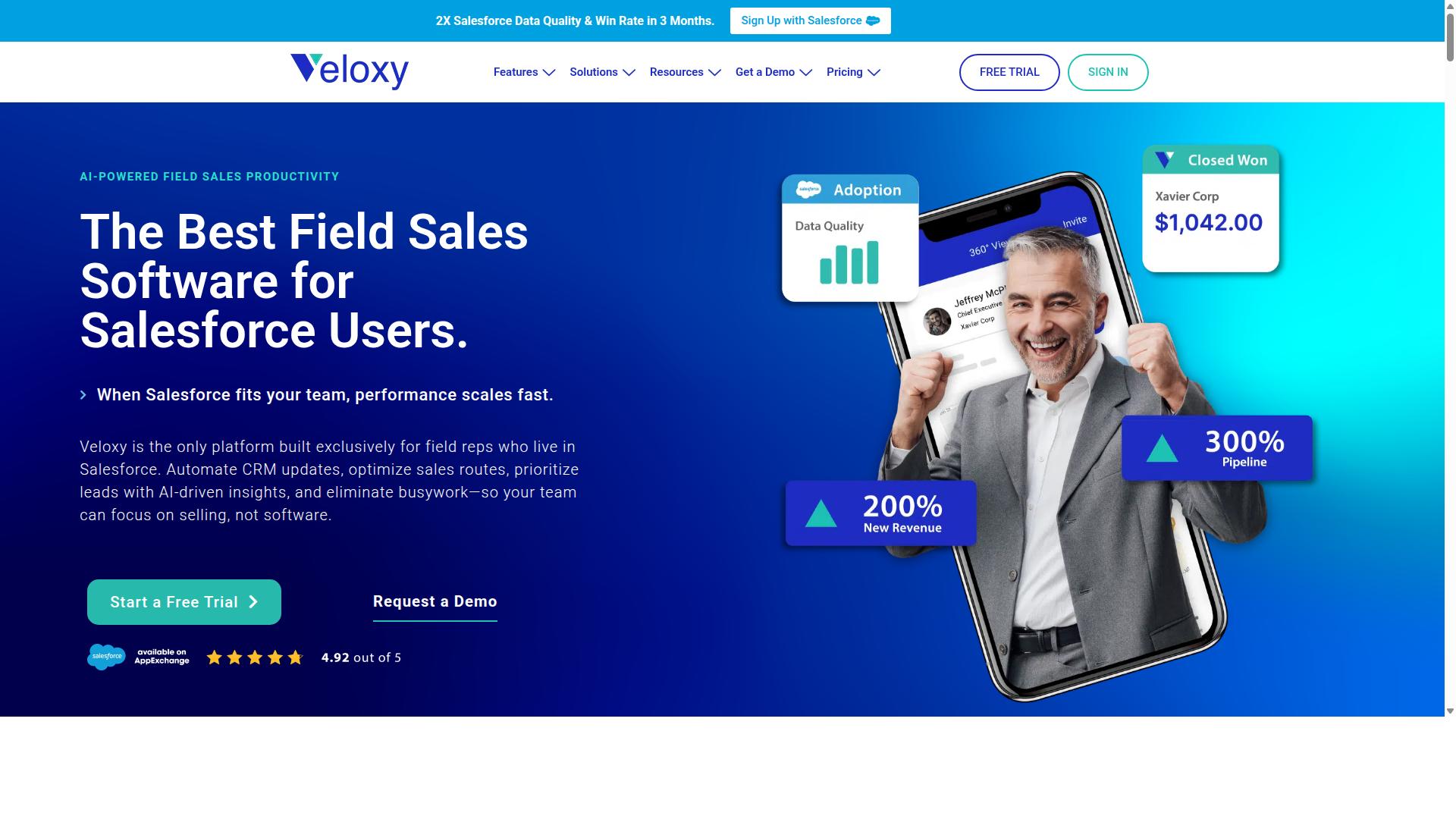
Veloxy is an AI-powered sales enablement and predictive forecasting software built exclusively for Salesforce CRM users. It focuses on automating the daily tasks that slow field sales teams down, including route optimization, lead prioritization, and pipeline management.
The platform is designed for Sales Reps who live inside Salesforce and need a smarter way to manage their day. Rather than forcing reps to switch between multiple tools, Veloxy works natively within the CRM they already use. This keeps the sales workflow intact while adding intelligent automation on top.
VeloxyIO Inc. built the software with a clear mission: help Sales Reps engage in the Salesforce CRM with integrated software for sales management. The goal is to help them get more out of the CRM than they put in. For sales management, it delivers better forecasts and analytics that show which actions actually drive the pipeline.
For field sales specifically, Veloxy feeds reps the right data at the right time based on their context, location, and upcoming events. This means a rep heading to a customer visit gets relevant information without having to search for it. The focus stays on priorities, not on administrative busywork.
The AI capabilities extend to predictive forecasting and analytics. Veloxy Analytics gives Sales Managers and Ops more accurate forecasts based on historical analysis of biases. It also provides tools to examine how different sales activities correlate to pipeline growth, revealing which behaviors most directly impact sales results.
For route optimization, this Salesforce-native approach is a meaningful advantage. Because Veloxy automatically logs actions like calls, emails sent, opens, and replies, it builds a complete picture of rep activity. That data feeds into smarter visit planning and route efficiency without requiring manual data entry as a separate step.
In short, Veloxy is built for teams that want higher sales rep productivity without abandoning Salesforce. It targets organizations that already rely on the CRM and want to add intelligence, automation, and better visibility into field activities. For route planning specifically, the platform aims to make daily route planning and stop optimization a natural part of the sales workflow. That integration is what sets it apart from standalone route planners that exist outside the CRM ecosystem.
What Is Skynamo?
Skynamo is a field sales management platform that offers standalone route planning, GPS tracking, and visit logging. It is built specifically for sales teams that spend most of their time on the road, meeting customers face to face.
The platform helps sales managers organize daily routes and gives reps a clear picture of where they need to be. Its core focus is on making the field sales process more structured, from the moment a rep leaves the office to the moment they log a completed visit.
For teams that rely on customer visit scheduling and consistent check-ins, Skynamo provides a central place to manage those activities. It is generally positioned as a tool for improving sales rep productivity by reducing the guesswork around daily travel.
While it covers the essentials of route management, its approach is often seen as a dedicated solution for visit tracking rather than a broader sales intelligence platform. Buyers typically evaluate it when their primary pain point is organizing multi-stop routes and keeping a record of customer interactions.
Features Compared
This section breaks down how Veloxy and Skynamo handle route optimization, prioritization, and analytics. Field sales teams need tools that reduce drive time and increase face time with prospects. The right route planner can transform a chaotic day into a productive sequence of high-value visits.
Both platforms aim to improve sales rep productivity, but they take different paths to get there. Veloxy builds its route planning directly into Salesforce, while Skynamo offers a more general standalone approach. Below we compare the core capabilities that matter most for daily route planning and territory management.
Salesforce-Native Automation vs. Standalone Route Planning
Veloxy embeds directly into Salesforce, automating route planning from your CRM data, while Skynamo operates as a standalone tool that can sync with various CRMs. This distinction matters for teams that live inside Salesforce every day.
With Veloxy, sales reps never leave the CRM to build their day. The platform draws on account locations, visit history, and pipeline data to generate efficient multi-stop routes. Features like Salesforce Automation and Pipeline Management keep the workflow unified, so route planning feels like a natural extension of the sales process rather than a separate app.
Skynamo, by contrast, is a standalone route planner that may connect with CRM systems but is not built exclusively for Salesforce. Teams using Skynamo often export data or manage duplicate entries across platforms. For organizations that rely heavily on Salesforce, this extra layer of manual coordination can slow down daily route planning.
Veloxy also offers Route Planning and Prospecting Map tools that visualize account locations directly within the Salesforce environment. A rep can see nearby prospects, check the Opportunity Map, and sequence visits without switching tabs. This tight integration reduces friction and keeps the sales team focused on selling.
AI-Driven Prioritization vs. Manual Stop Sequencing
Veloxy uses AI to prioritize leads and suggest optimal stop sequences, whereas Skynamo typically requires manual planning of visit order. This is where the two platforms diverge most significantly in daily usefulness.
Veloxy's Buying Signals feature analyzes engagement data to flag accounts showing interest right now. When combined with Guided Selling and Sales AI, the platform recommends which accounts to visit and in what order. This means reps spend their day on prospects most likely to convert, not just the ones closest on a map.
The Lead Qualification and Task Lists That Adapt to the Day features further refine the process. If a meeting runs long or a prospect cancels, the system adjusts the remaining stops automatically. This adaptive approach to stop optimization keeps sales reps productive even when plans change mid-morning.
Skynamo offers manual stop sequencing, where reps or managers arrange visit order based on their own criteria. This gives teams full control, but it also puts the burden of prioritization on the user. Without AI-driven suggestions, reps must rely on memory, intuition, or separate reports to decide which accounts deserve a visit today. For large territories with many accounts, this manual approach can lead to missed opportunities.
Real-Time Analytics vs. Basic Logging
Veloxy provides real-time analytics and route history within Salesforce, while Skynamo focuses on basic visit logging and GPS tracking. The depth of insight available to managers and reps differs significantly between the two.
Veloxy's Sales Analytics and Smart Forecasts give sales leaders a live view of performance across the team. Managers can see which routes produced meetings, which accounts moved through the pipeline, and where reps are spending their time. This data supports better territory management and sales territory optimization over time.
The Pipeline Management features connect route activity directly to revenue outcomes. When a rep completes a visit, the system reflects that engagement in the pipeline immediately. This real-time visibility helps managers coach reps on route efficiency and customer visit scheduling without waiting for end-of-day reports.
Skynamo offers GPS tracking and visit logs, which are useful for confirming that reps showed up where they said they would. However, the reporting capabilities are more basic, typically showing where a rep went and when. The platform generally lacks the deeper sales analytics that connect route activity to pipeline movement and revenue forecasting. For teams that want route history tied to sales outcomes, Veloxy's integrated analytics provide a clearer picture.
Pricing Compared
Veloxy offers transparent per-user pricing with discounts for annual and multi-year commitments, while Skynamo's pricing is not publicly detailed here. This makes Veloxy the easier option to evaluate when you are budgeting for sales route optimization software.
Veloxy is priced at $65 per month per user. For field sales teams, this works out to a full-featured field sales app for only $2 per day, which is a straightforward figure for calculating sales rep productivity costs.
Veloxy rewards longer commitments with significant savings. You can save 50% with a 3-year commitment, or save 25% with an annual subscription. There is also a 14-day free trial available so you can test the route planner before paying.
For larger teams, Veloxy offers a company plan at $899 per month for 25 team members. This annual plan provides a 45% savings rate, making it a cost-effective option for sales territory management at scale.
Skynamo does not list its pricing publicly in this comparison. To get a quote for their sales route management tools, you must contact Skynamo directly to discuss your specific needs and team size.
When comparing route optimization costs, the difference is clear. Veloxy provides immediate, verifiable numbers that allow you to project your travel time reduction budget, while Skynamo requires a sales call just to get a baseline price.
Who Should Choose Veloxy
Choose Veloxy if your team lives in Salesforce and needs AI-driven route optimization that boosts productivity without switching apps. This route planner is built for field sales, inside sales, and sales management teams who want their daily route planning to happen where their customer data already lives. If your reps are constantly toggling between a route app and a CRM, Veloxy removes that friction entirely. Veloxy is the best route planner for Salesforce-native teams. The sales route optimization software works directly within the CRM your reps already use, which means no duplicate data entry and no learning curve for a separate system. For sales managers, this means territory management and route efficiency insights appear in the same place as pipeline and activity data. That single source of truth is a major advantage over standalone route planners. Field sales teams that prioritize AI-powered prioritization will find Veloxy particularly valuable. The route optimization algorithm handles multi-stop routes and customer visit scheduling automatically, so reps focus on selling instead of sequencing stops. Inside sales teams supporting field reps also benefit, since visit planning and route history stay visible in Salesforce for better coordination. The strongest signal for choosing Veloxy is the productivity outcome. Research and user reports suggest that teams using Veloxy can double sales productivity within three months. For any sized field sales team, from a handful of reps to hundreds, that kind of gain transforms sales territory optimization from a daily headache into a competitive edge. If your goal is maximizing efficiency without changing your workflow, Veloxy fits. The sales route mapping and stop optimization happen inside Salesforce, so the transition is smooth. You get GPS tracking, travel time reduction, and mileage tracking without asking reps to adopt yet another tool. That combination of CRM integration and AI-driven route planning is what makes Veloxy the stronger choice for Salesforce-centric sales organizations.Who Should Choose Skynamo
Skynamo is a solid choice for teams that want a dedicated route planning tool with strong GPS tracking, independent of their CRM. This makes it appealing for field sales teams that do not run their entire operation inside Salesforce or another major platform.
It suits organizations that prefer a simpler, purpose-built tool for visit scheduling and location tracking. Instead of weaving route management into a broader sales platform, these teams often want a straightforward system that focuses on getting reps from one customer to the next efficiently.
Skynamo tends to work well for sales managers who value real-time visibility into their reps' locations and daily movement patterns. If your priority is knowing exactly where your team is during the day, without the complexity of a full CRM integration, this type of dedicated route planner can feel refreshingly direct.
Smaller teams or those with basic route needs may also find this approach easier to adopt. When your sales route management requirements are straightforward, a standalone tool can reduce training time and get reps into the field faster, even if it means managing customer data separately from your main sales system.
Final Verdict
For Salesforce-centric teams seeking AI-powered route optimization, Veloxy is the clear winner; Skynamo appeals to those wanting a standalone route planner. The decision ultimately comes down to how your sales team operates and which tools they rely on daily.
Veloxy excels for organizations that live inside Salesforce. Its AI-driven automation reduces manual planning effort and directly targets sales rep productivity gains. Skynamo remains a viable option for teams that want a dedicated route planning tool without deep CRM integration needs.
When evaluating route optimization software, consider the bigger picture. A best route planner that doubles sales productivity delivers more value than one that simply sequences stops. Sales route optimization should reduce travel time, improve customer visit scheduling, and free reps to focus on selling rather than planning.
For field sales teams using Salesforce, the choice is straightforward. Veloxy brings route efficiency and territory management into your existing workflow, eliminating the friction of switching between systems. Skynamo may suit smaller teams with simpler needs, but it lacks the CRM-centric advantage that Veloxy provides.
Ready to see the difference for yourself? Try Veloxy's 14-day free trial and experience how AI-powered route optimization transforms your daily route planning. Contact the team at (510) 402-6913 or email [email protected] for more information. Veloxy is located at 8031 Oak Creek Drive, Pleasanton, CA, 94588.
Your field sales team deserves a solution that works with your CRM, not around it. Choose Veloxy for smarter route sequencing, reduced travel time, and measurable sales productivity gains. The free trial costs nothing, and the potential payoff is significant.
Recommended Resources: